When it comes to strength training, two common ways to measure intensity are Reps in Reserve (RIR) and Rate of Perceived Exertion (RPE). Both tell you how hard you’re working, but they do it in different ways.
Reps in Reserve (RIR): Counting What’s Left
RIR is simple—you finish a set and estimate how many reps you could have done before hitting failure. If you rack the bar and think, “I could’ve done two more,” that’s an RIR of 2.
RIR Scale
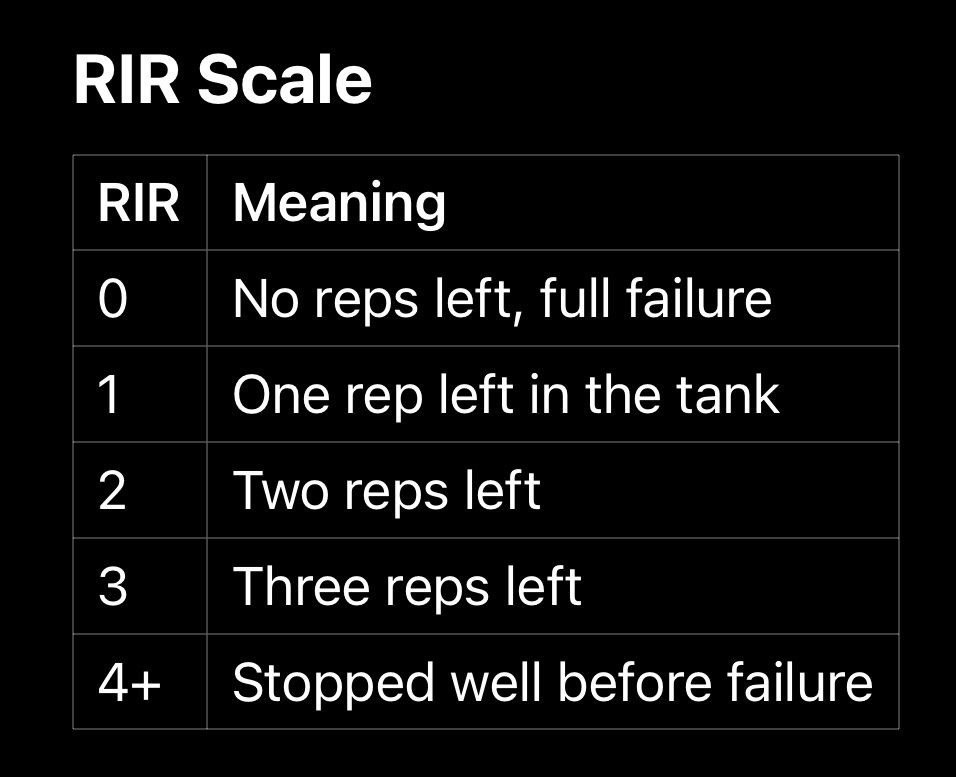
RIR is great because it keeps things objective—you’re focusing on what’s physically possible, not just how you feel.
Rate of Perceived Exertion (RPE): How Hard Did It Feel?
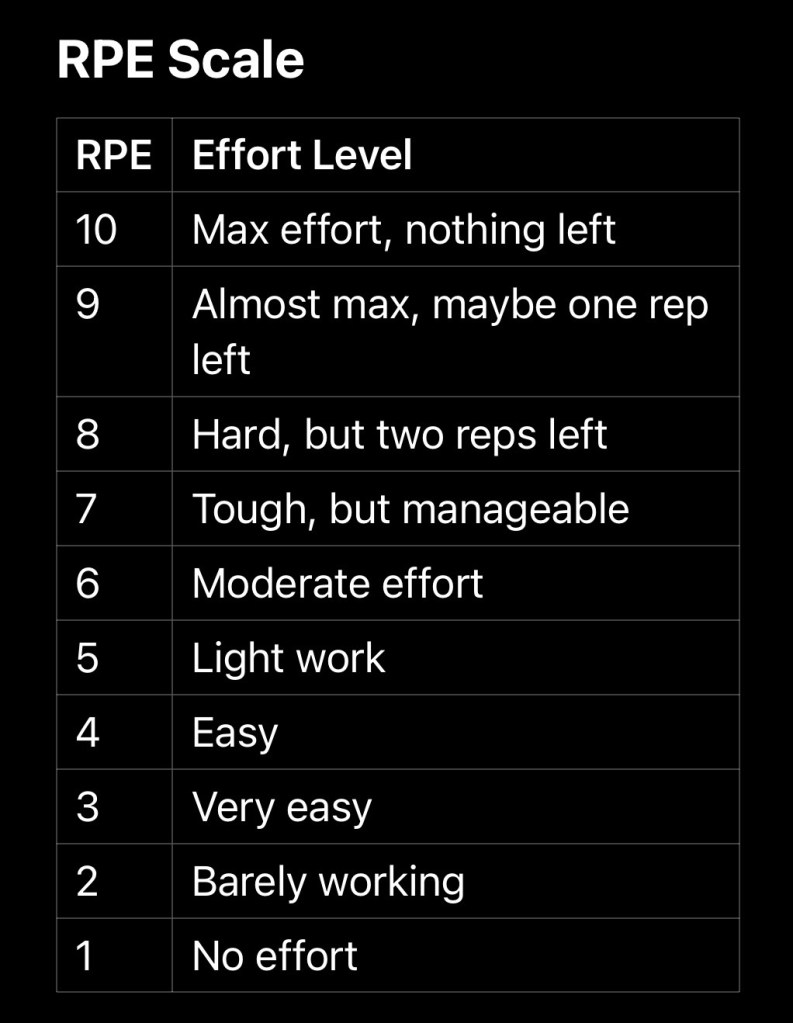
RPE, on the other hand, is based on perception. It’s a 1–10 scale where 10 is an all-out max effort, and 1 is a warm-up.
RPE Scale
How RIR and RPE Work Together as a Safety Net
Let’s say I program 4×8 squats at RPE 8 (RIR 2). That means you should be using a weight that allows you to complete 8 reps while still having 2 reps left in the tank.
Now, let’s say you start your set, and everything feels good—until rep 7. Suddenly, that rep feels like an RPE 8. At this point, if you push for rep 8, you’ll likely be at an RPE 9 or even 10, meaning you’d overshoot the intended intensity.
What do you do? You stop at 7 reps instead of forcing 8.
This is where using both RIR and RPE together acts like a mechanical governor to prevent overreaching.
• RPE 8 is the ceiling. If you hit it early, you don’t push past it just to reach the prescribed reps.
• RIR 2 is the guide. It tells you how close you should be to failure.
• If you hit RPE 8 too soon, it’s a sign that the weight is too heavy or fatigue is higher than expected.
Why This Works
By letting RPE dictate the stopping point, you auto-regulate intensity based on your strength that day. Some days, the prescribed reps will feel just right. Other days, fatigue, sleep, stress, or recovery might mean that 8 reps is too much, and cutting it short prevents you from pushing too hard.
This keeps progress steady while reducing the risk of burnout or injury. Over time, you get better at picking weights that align with the intended intensity, making your training both efficient and sustainable.
Which One Should You Use?
Both have their place. RIR is great for planning progression, while RPE helps you adjust for daily fluctuations in strength. You can even combine them—an RPE 8 usually lines up with an RIR of 2.
At the end of the day, it’s all about knowing when to push and when to leave something in the tank. Train smart!
 Turner Strength and Performance